Good Bones

They call it settling
the reason this aging
plaster suffers cracks:
fine webs of them throughout the house,
a few deep enough to cause concern.

We exercise maintenance:
replace a rotting joist,
caulk the gaps,
ream the pipes and flush the tank,

but the to-do list is never done:
the back door is drafty,
electrical shorts leave us in the dark,
and the plumbing suffers a constant drip.

Good bones, they say,
keep the walls standing
solid around me,
until age and gravity
exact their toll

and I no longer recognize
this house in which I dwell.

Ice and Fog

Stepping outside to feed the birds
I find fog risen in the night.
It does not swirl around my legs
but parts and leaves a path in my wake.

Beneath the solid cloud unseen
winter grass crackles.
Black birdseed tossed to the ground
skitters and disappears.

Returning to the house I find
the bottom porch stair
where I slip and nearly fall.
Hidden ice.

Hidden eighteen years ago
when I visited you in Amsterdam.
We planned my move to you,
our move to winter on the North Sea.

Fog hid the crystalled sand
that crunched beneath our feet.
You hid two women from each other,
living two lives that couldn’t help but overlap –

fog over grass, fog over sand –
until she knew, then I knew.
This morning, sun rising to heat
the cold earth: fog lifts, ice melts.

– Jane


Thanksgiving

My baby was ten days old when they took me away. The cops muttered “Crazy” when they found me standing barefoot on the hot black asphalt, nothing but a towel wrapped around my 200 pounds.

The neighbors had heard me screaming at my husband, but they were too afraid to make the call. They didn’t want me keying their car again or threatening to burn down their house.

You were scared of me too. I saw it on your lousy poker face. You had to wonder how fast you could run after you confessed that my baby boy had been taken from my house. You had to cringe when I learned you’re the reason I have to stay sober, stay clean, stay on the meds I hate because they dull my day, tarnishing the silver jet streams in my head.

You didn’t know what I would say, but you’ve heard me swear and threaten; you’ve seen me put my fist through a wall and kick down a door. But you stood there, and you told me the police took my baby because his crazy parents couldn’t take care of him yet.

I raised my hand. You flinched. I reached in – and hugged you, and I said, “Thank you.”

Card

So this is what happens: a woman buys a wedding card she really likes for her nephew and his new wife, and while she’s at it she finds a funny birthday card for him. She puts them in her lunchcase – (that’s a briefcase/lunch bag combo) – for safe keeping.

She could mail the envelopes, but she’s looking forward to tucking them in the gift card basket at the wedding reception.

As fate would have it, she catches – not a bus, not a man, and certainly not the bouquet, but – a dreadful virus that throws her under a bus, causing her to miss the big bash. Meanwhile, the cards ride around in the aforementioned bag, forgotten in a feverish haze, and as might be expected they get lunched upon (specifically, doused with raspberry-flavor green tea) and cased upon (by a thick file or two).

Frankly, she should toss the cards in the recycle bin and start over, but oh she did so like them when she chose them.

At the risk of making her dear nephew’s new wife worry at the psychiatric health of the family she’s married into (he learned a long time ago worrying is wasted on the wacky), the aunt tucks all her good intentions into one large envelope, seals it with a kiss, and sends it with her love – my love – to Matt and Kerri.        – Aunt Jane

Lima Beans

“Janie. You don’t like lima beans?”

My Auntie Donna couldn’t believe it, not of the little girl she’d introduced to Limburger cheese on rye when I was six or seven, and served homemade borscht, beet red with pride made elegant with a drift of sour cream and onion diced small as a single tear.

Auntie Donna, no bigger than a minute, loved to eat and loved to prepare favorite meals, planning for weeks what to serve company: for Susan, salmon on the grill; for Donna (her namesake), pork roast; for me, her vegetarian, split pea soup (she assured me she’d removed the ham bone before I arrived).

Even better than cooking was dinner out – Jack liked to treat her whenever he was in town on business, or I would pick her up on my way to Michigan. We’d ride out Rose Road to her favorite Crocker Park, with its stores and restaurants, walkways and benches. “Janie,” she’d say. “Let’s sit a minute. I have to catch my breath.” And we would, for a minute, or three minutes, or five, until she could breathe easily again, or a red purse in a store front caught her eye.

Since I didn’t live close by I couldn’t share home cooked meals, so once or twice a year I’d ship dinner to her. There is nothing more satisfying than giving a gift to someone who makes you feel as if you’ve handed them diamonds on a gold platter – or better: Maryland crabcakes on a paper plate.

She sang their praises and mine too.

She had a joy of being – a walk to the end of the driveway to check the mail (perhaps finding an irreverent tale from me); a phone call from Donna Lynn (called Auntie Donna by her nieces); let Sugar in, let Sugar out, let Sugar in (catering to another perfectly good dog spoiled); searching through cookbooks for perfect recipes because I told her I was picnicking with friends at Wolf Trap – caprese salad, bulghur salad, shrimp salad. She did not have to go to be happy that you were going.

Last week she was in the hospital, intubated, but her heart was strong, her will to live stronger, and she was not ready to draw her last breath. Instead, she pulled out the tube. She greeted Michael, her much-adored son, with a cherubic smile and rosy pink cheeks, and announced in a croaky voice, “I’m ready to go home now.  I want to see Sugar. I’m hungry for spaghetti. (Family recipe. Best ever. I’ll make it for you if you’d like.) I want to go home.”

Instead she went to hospice.

For all the letters and phone calls and visits from the rest of us, I know she missed her sister dreadfully. If heaven exists, I am happy beyond measure that they are together again. Her son, her nieces and nephew, will scatter her ashes where we scattered her sister’s, atop their mother’s grave.

Until the day I die and am mixed with the ashes of the women before me like salt to the earth I will challenge myself anew, as I hear my Auntie Donna say, “You don’t like lima beans?!”

I do now, Auntie Donna. Thanks to you, I do now.

Auntie Donna-Sugar Too

– Jane
May 31, 2013

Inner Harbor

Rebecca arrived with a wave of
librarians. Out of the conference
she earmarked time for us, for
dinner at McCormick & Schmick’s.

I like saying the name, but
we chose it for convenience –
20 feet from the lobby, down a dark hall
through a door with a porthole, connoting seafood –

convenience  and a gift certificate
from Rebecca’s hotel.
$25 is a nice reduction
at the end of two working girls’ work days.

A table with a view of the harbor,
cast in the sparkles of evening sunlight
off dark water, churned by propellers
of boat taxis and Black-Eyed Susan’s paddle wheel.

Shades of Dixieland, the war still waged:
Was Maryland North or South?

The city’s walking trail rounded the point
under a canopy of spring’s first green,
relief to a businessman flinging a Frisbee
to his young black Lab,

the dog retrieving, his master’s tie
flapping with exuberance –
a day’s moment of freedom
in a world of someone else’s time.

Two old friends, not yet old, catching up
on news old and new: what are you reading?
how is the family? how’s the new job?
(It’s a job.), over tilapia and scallops.

We paid the bill, less the $25,
plus tax and tip, including the $25
– writers doing math – and hugged goodbye
by the landlocked door with a porthole.

Just Being Neighborly

My next-door neighbor Rick has mown my lawn for eleven years. He has done so for free –absolutely no charge, even with gas at nearly $4 a gallon–since the day I moved in. I offered, to which he’d take umbrage, pretending not to see me as we both fetched our newspapers until he’d recover from my ill manners.

I believe he also did this for Fred, the original owner of my home, a little old man who probably appreciated the chore being done for him–as did I. Being of a precise and practical nature (I’ve learned this of Fred over the years from living in his compact home), Fred probably also appreciated that Rick mowed the grass to within an inch of its life–shorter than an inch in length.

How terribly practical to scalp the lawn so you don’t have to cut it very often, Fred might have figured. Personally, this is where Fred and I would have parted.

I asked Rick once a year, at the beginning of each mowing season, to leave my grass four inches long.

Each year his look was one of shock and confusion, like: What is this stupid woman saying?

Then he would nod at me and say, by way of being neighborly, “Sure,” but his look said, “Just agree.”

Just agree and go back to cutting it short as a golf green at Augusta.

I didn’t help matters over the years. I have no need for grass and mowers–I don’t have children to use the yard for a soccer field or to pitch a tent. I love trees and shrubs and unkempt hedges, all of which require more time to mow around. Instead of a third of an acre in the shape of a racetrack, I plunked down a hedge of lilacs, a row of Green Giants, a bed of herbs and bulbs around a Japanese red maple.

Rick took these in stride, riding over the mulch and tearing up the thin plastic weed guards–and if he still couldn’t get close enough to the sprigs of grass growing up the tree trunks, he’d pull out the weed whacker and go to town–gouging the bark, whacking off flowers, even slicing into the siding of my house.

Grass was to be tamed, the little woman controlled, no matter the collateral damage, no matter if I asked him not to. The result, if not his intent, was always, “She gets it for free. I get to do it my way.”

But it wasn’t free. Every summer I wracked my brain trying to think what to give him by way of thanks: a case of good beer (turns out he only drinks scotch), a gift certificate to his favorite bar (turns out he doesn’t go there anymore), a gift certificate to his favorite new bar (that was the year he decided the amount was too much so he promptly delivered a bottle of wine the size of my leg, because he could not stand to be beholden).

And still my tree trunks were scarred and dangling tomato-plant limbs hacked off–and by August the grass was so short he was mowing dirt into dust storms and turning my yard into a mud hole with the first autumn rain.

Last week his wife Kathy called me to say she didn’t want Rick mowing my lawn anymore, because of the steep bank out front. She said, “I’m worried he’s going to slip and break a hip.”

Rick smokes like a chimney–he leaves a trail of cigarette butts across my yard–so my concern has been less about the steep bank and more about the impending heart attack.

“He is worried about one thing,” Kathy added.

“What’s that?”

“He hopes he likes how the next person does your yard.”

“Oh sure,” I said, being neighborly. I’m just glad the next person I hire will charge me, leaving me free to tell him to leave his weed whacker at home.
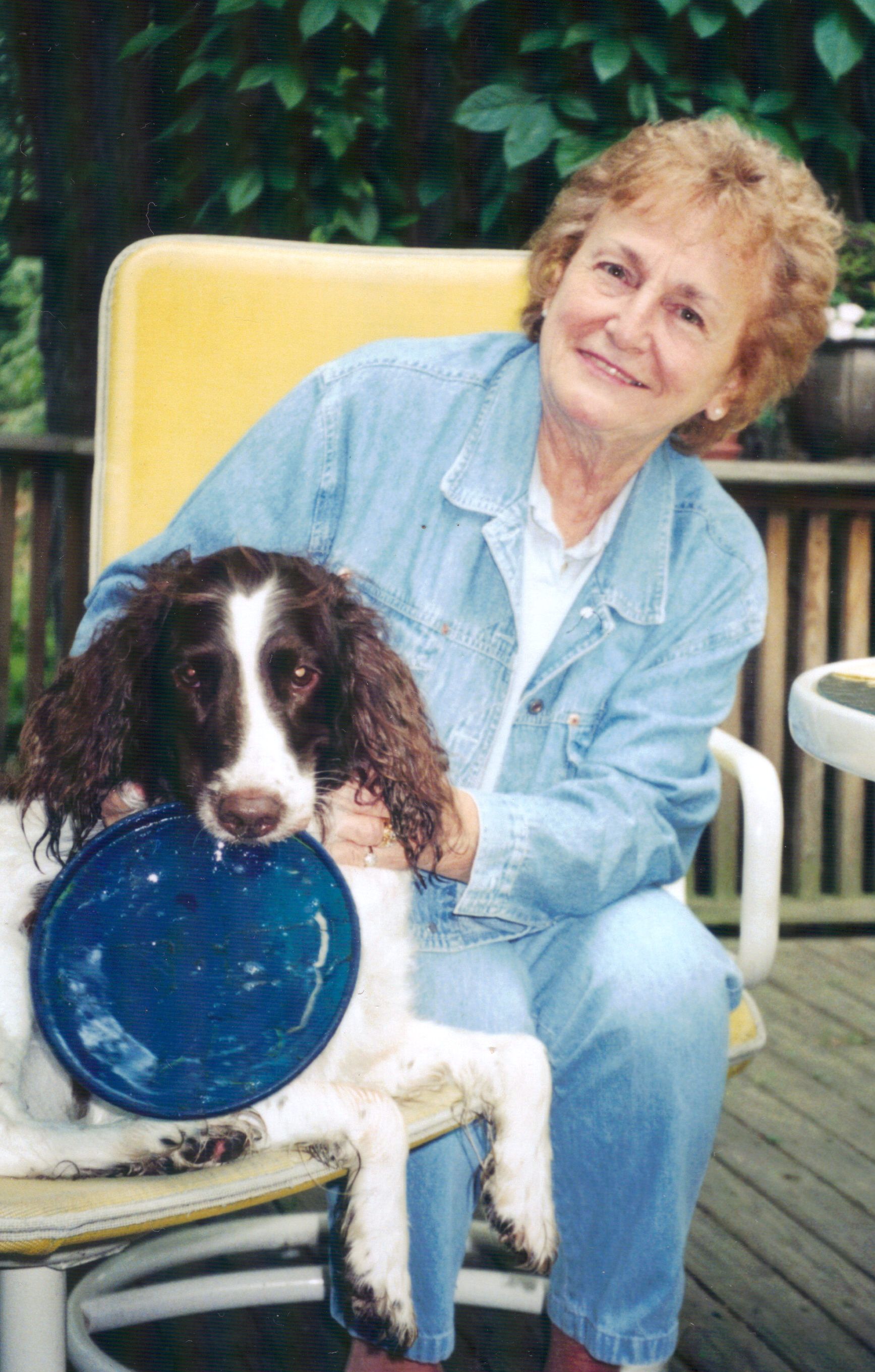
“Hi, Mom”

I pop a cold beer,
start chicken thighs to browning,
and call you to talk.
Sharing an appetizer
five hundred miles away,
I hear you pour your beer
in a glass of green crystal.

I swig mine from the bottle,
green, like yours,
chilled from the refrigerator.
Preparing dinner,
your knife thunks through the carrot,
over the phone,
into the cutting board.

As if no extra effort
you’d slice raw carrot sticks for me,
served like orange flowers in a juice glass.
In a workaday world
I know preference matters,
receiving firsthand
your attention to detail.

I drink my beer from the bottle
but offer a glass to my guest.